
Field Update · Events
Our Week at World Demolition Summit 2026
Madrid, a keynote on the Saturn Test Stands implosions with NASA, and an awards night that reminded us who we do this for.
On the morning of January 10, 2026, two of NASA’s most storied test stands came down within seconds of each other, each one landing inside its designed footprint. Telling the story of how they got there took a little longer: a twelve-minute film, a keynote stage, and a trip across the Atlantic to Madrid, Spain.
From November 3 to 5, the Target Contractors team joined demolition contractors, equipment makers, engineers, and owners from around the world at World Demolition Summit 2026, organized by D&Ri and KHL Group. It is three days of conference sessions, awards, and networking, and a rare chance to stand in one room with the people who do this work everywhere else. We came to learn, to connect, and to share one of the most complex projects in our company’s history.
Arriving in Madrid
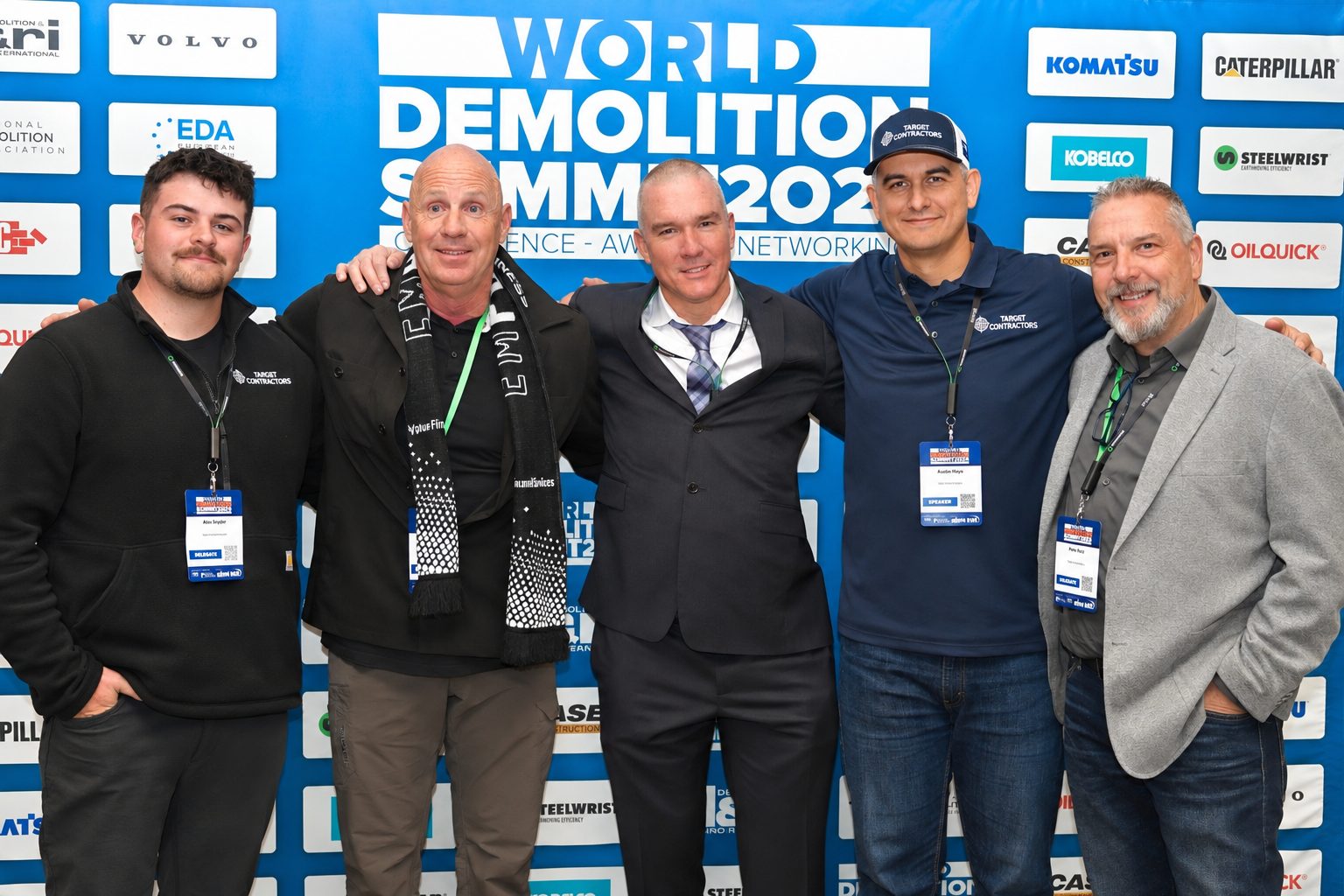
Our delegation included President David Evans, Executive Vice President Austin Hays, Director of Federal and Special Projects James “JJ” Martin, Site Safety and Health Officer Alex Snyder, and Director of Marketing and Communications Peter Bella. We landed ready to work, but Madrid has a way of slowing you down for a moment.
Between sessions we caught the city in two very different lights: the Metrópolis building glowing against the night sky, and the lake at Retiro Park, where rowboats drift past a grand monument in the autumn sun. It was a good reminder that the places we travel to for work are worth looking up from the schedule to see.


Opening networking
The summit opened the way these events do, with handshakes, introductions, and a lot of catching up. In an industry that is global but close-knit, the opening networking is where familiar faces and new ones share a room, and where conversations that will matter next year often begin.
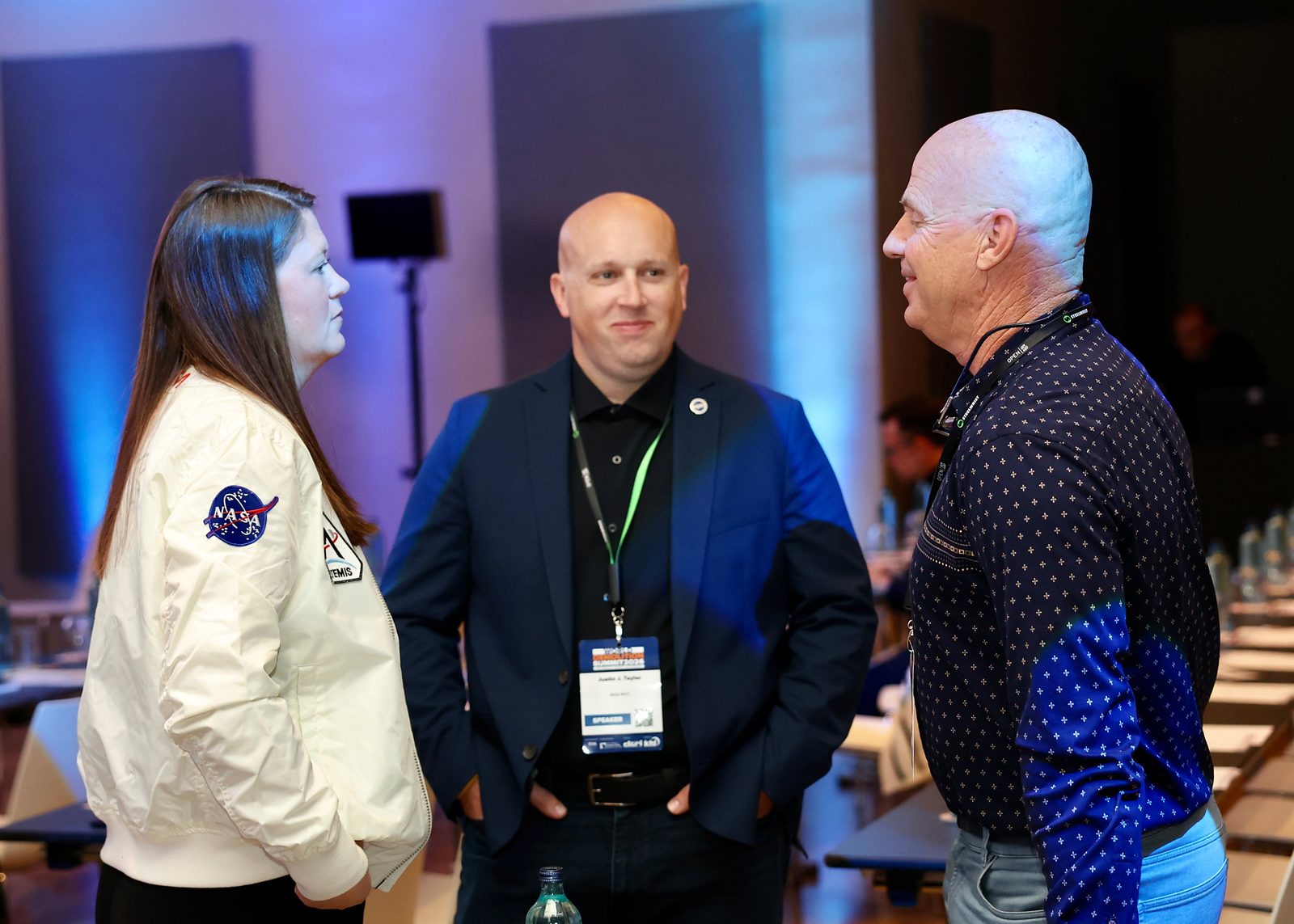
For us it was also a chance to see our partners from NASA Marshall Space Flight Center, Megan Vansant and Justin Taylor, who would share the stage with us later in the week. A project like the Saturn Test Stands is never one company’s story, and it felt right to begin the week with the people who trusted us with it.
The same is true of our joint venture partner, Ahtna. They weren’t with us in Madrid, but the Ahtna-Target JV was one team from the day it formed, and every part of the story we told belongs to them as much as to us.
Keynote day
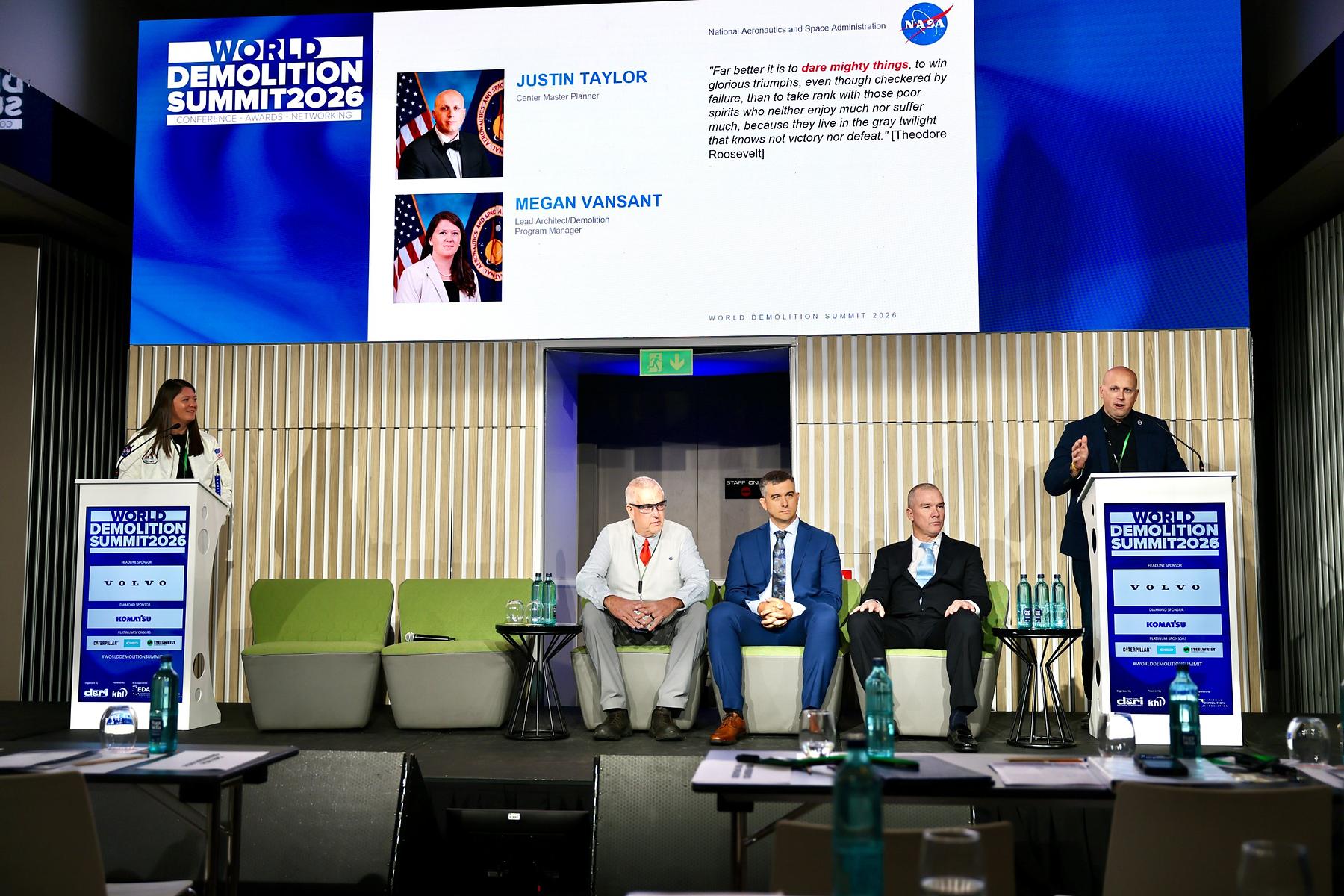
Then came keynote day. At 11:30 AM, with two podiums, a row of low green chairs, and three wall-sized screens filling the front of the room, NASA opened the session. On the screen, beside the photos of Megan Vansant, Lead Architect and Demolition Program Manager, and Justin Taylor, Lead Center Master Planner, was a line from Theodore Roosevelt:
“Far better it is to dare mighty things, to win glorious triumphs, even though checkered by failure…”
Theodore Roosevelt, on NASA’s opening slide
It was a fitting way to begin a story about two structures built for the age of rocket testing, and about the people who took on the job of bringing them down.
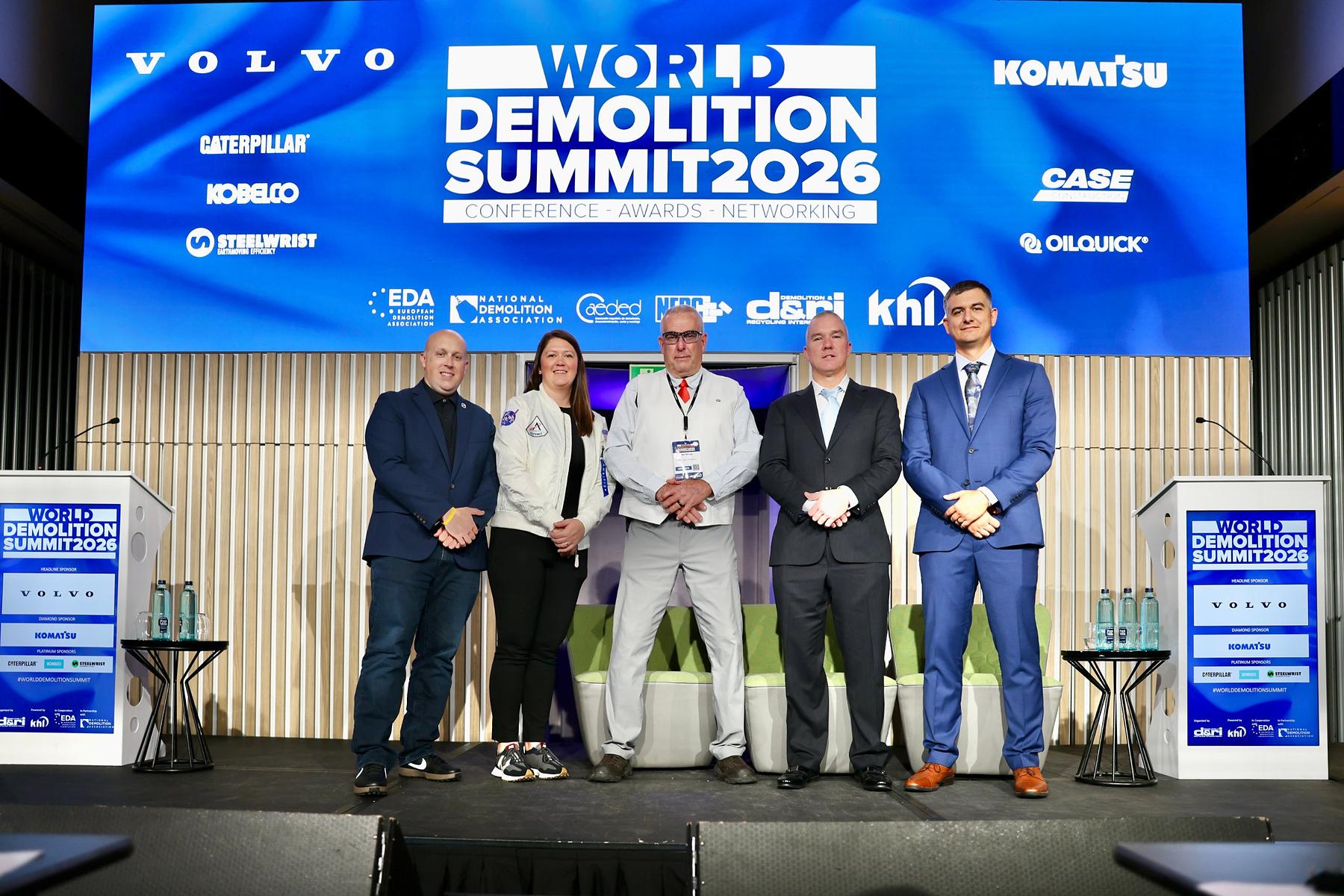
Our part of the story picked up from there. We called it “Bringing Down the Saturn Test Stands,” and the full keynote title, “From launch era to demolition challenge: decommissioning NASA’s test stands at Marshall Space Flight Center,” says what we set out to do: follow these two stands from the launch era to the day they came down. We told it in three chapters, each led by someone who lived it.
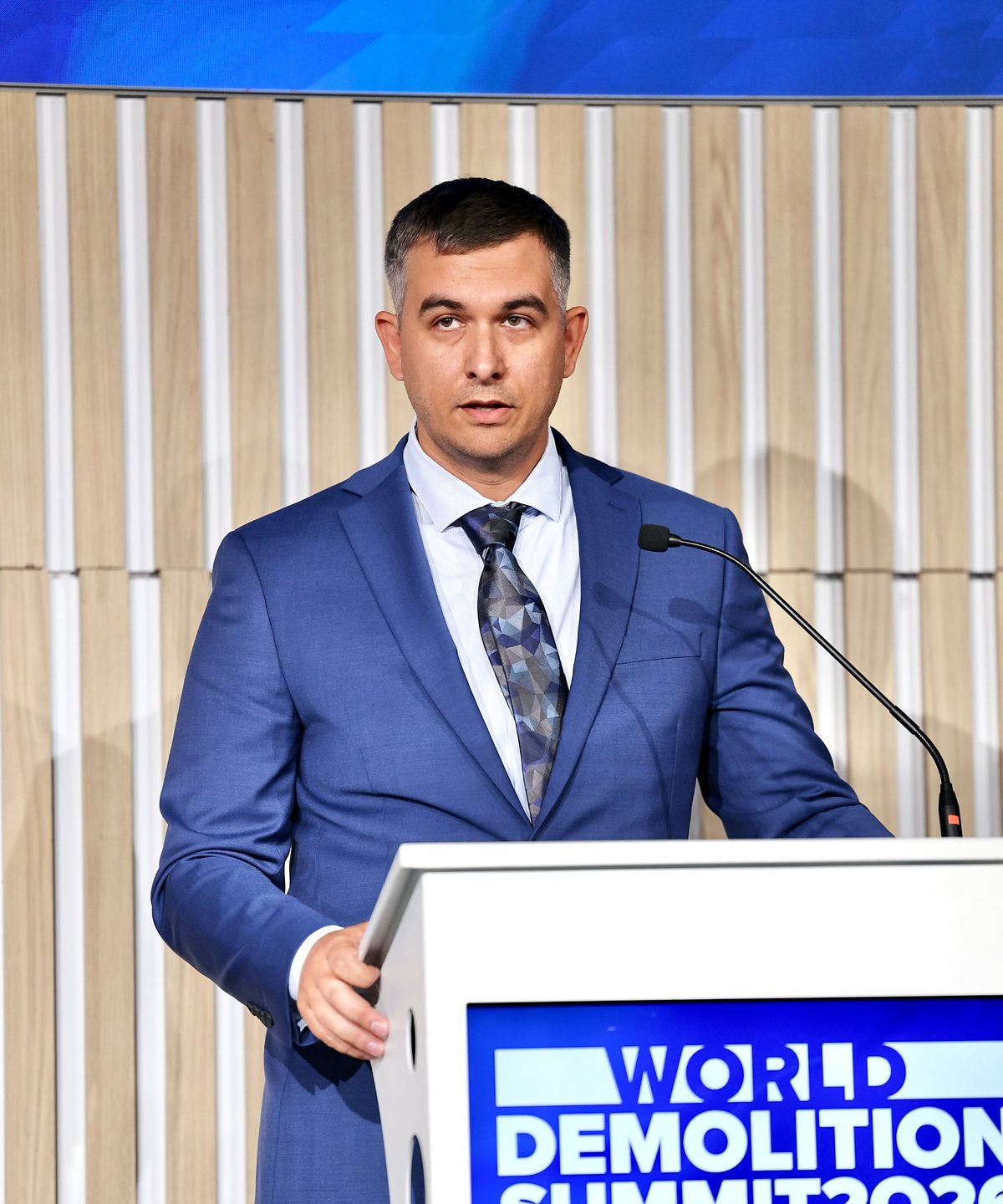
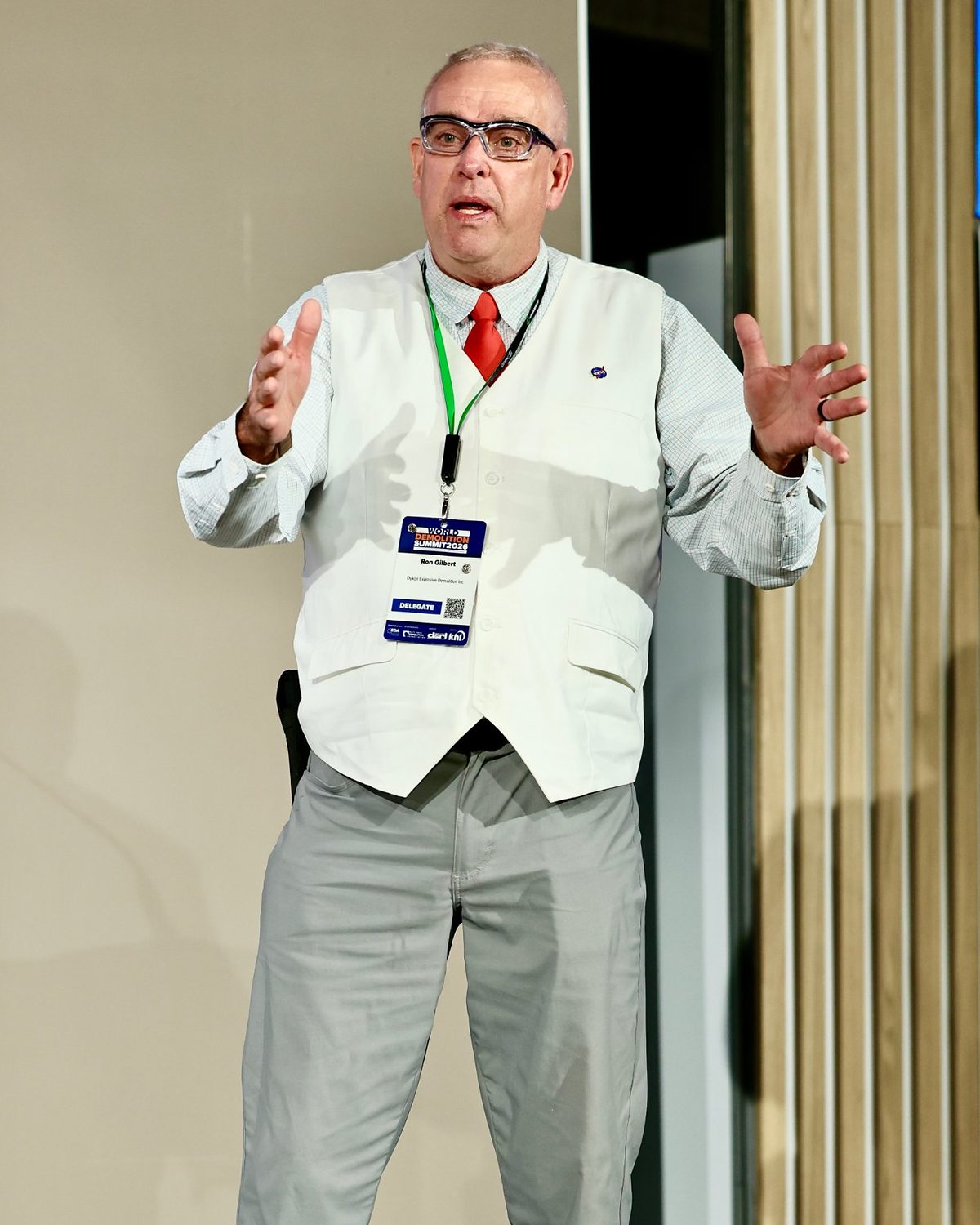
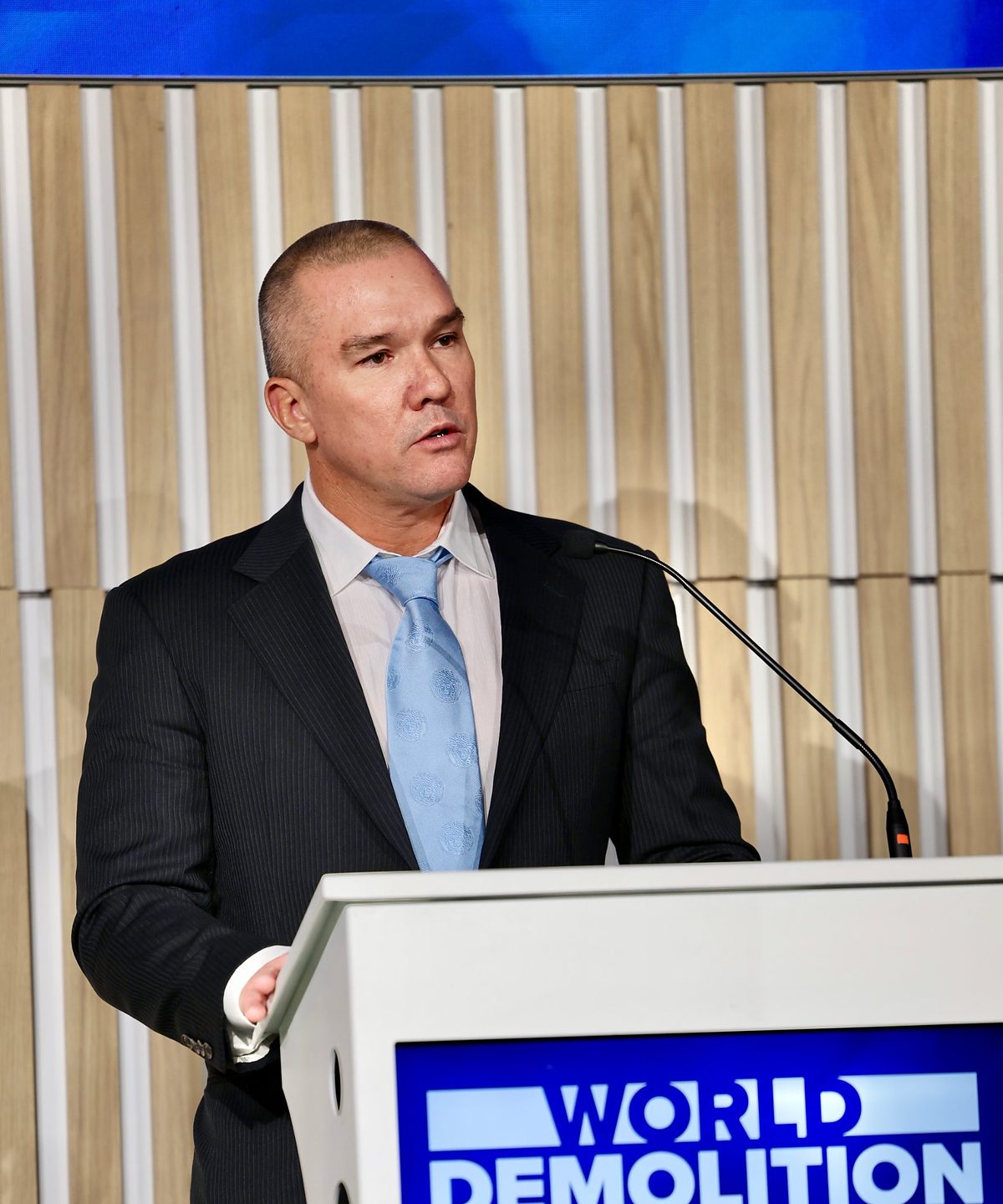
Partnership and planning
Austin Hays started where every project does, with people. He walked the audience through how Ahtna and Target came together as one joint venture team with shared accountability for this project. Target had earned the work through its own past performance with NASA and treated that trust as a privilege, not a given, and Ahtna joined us as our partner on this project. Before anything was loaded or cut, the team led a scoping and facility alignment phase that set the plan, and worked through early regulatory challenges to keep the project on course.
The structures themselves set the stakes. The Saturn V Dynamic Test Stand rose 363 feet, roughly 410 with its crane, on a footprint of just 98 by 98 feet. The Saturn I Static Test Stand stood 200 feet tall and was built to hold live boosters under full thrust. Both were engineered to resist enormous forces, which is exactly what makes bringing them down such a puzzle.
Explosives engineering
Ron Gilbert, Vice President of blasting operations at Dykon Demolition and DetX, took the audience inside the explosives engineering plans and execution. His team surveyed each structure and, working with engineering lead Paul Rose, designed the safest possible fall. They tested legacy and newly designed materials, on site and off, with live explosive products, and built blast plans with Keith Best to keep air overpressure low and protect the assets around the stands.
Then the plan had to be carried out, with the support of every stakeholder and team member. Ron’s theme was one our industry lives by: Down safe. Home safe.
Execution and command
JJ Martin carried the story from the drawing board to the day itself. Every pre-weakening cut was engineered so that each tower would fall exactly as modeled. A central Command Center unified project leadership, site security, the ATF, and the FBI, and the team monitored seismic vibration, airblast, drone surveillance, and live weather right up to the final second. All of it came together on an accelerated schedule, through leadership changes, shifting priorities, and a limited supply of energetics.
The result
At 9:46 AM on January 10, both towers came down within their designed footprints, with no impact to the NASA assets around them. Twelve seismographs monitored each event. Peak ground vibration measured 0.1497 inches per second, about one-fifth of the U.S. Bureau of Mines threshold for minor damage, and independent analysis found no damage to nearby structures. The team logged 29,905 worker hours without a single OSHA recordable or lost-time incident, and more than 90 percent of the nearly 30,000 tons of material was recycled.
Remembrance
Before the video, we paused for a moment of silence in remembrance of colleagues lost in our industry, including those lost at Accurate Energetic Systems. We honor their memory, their service to our field, and the families they left behind. Work like ours depends on getting everyone home, and the pause was a reminder of why that theme matters so much.
Q&A with NASA
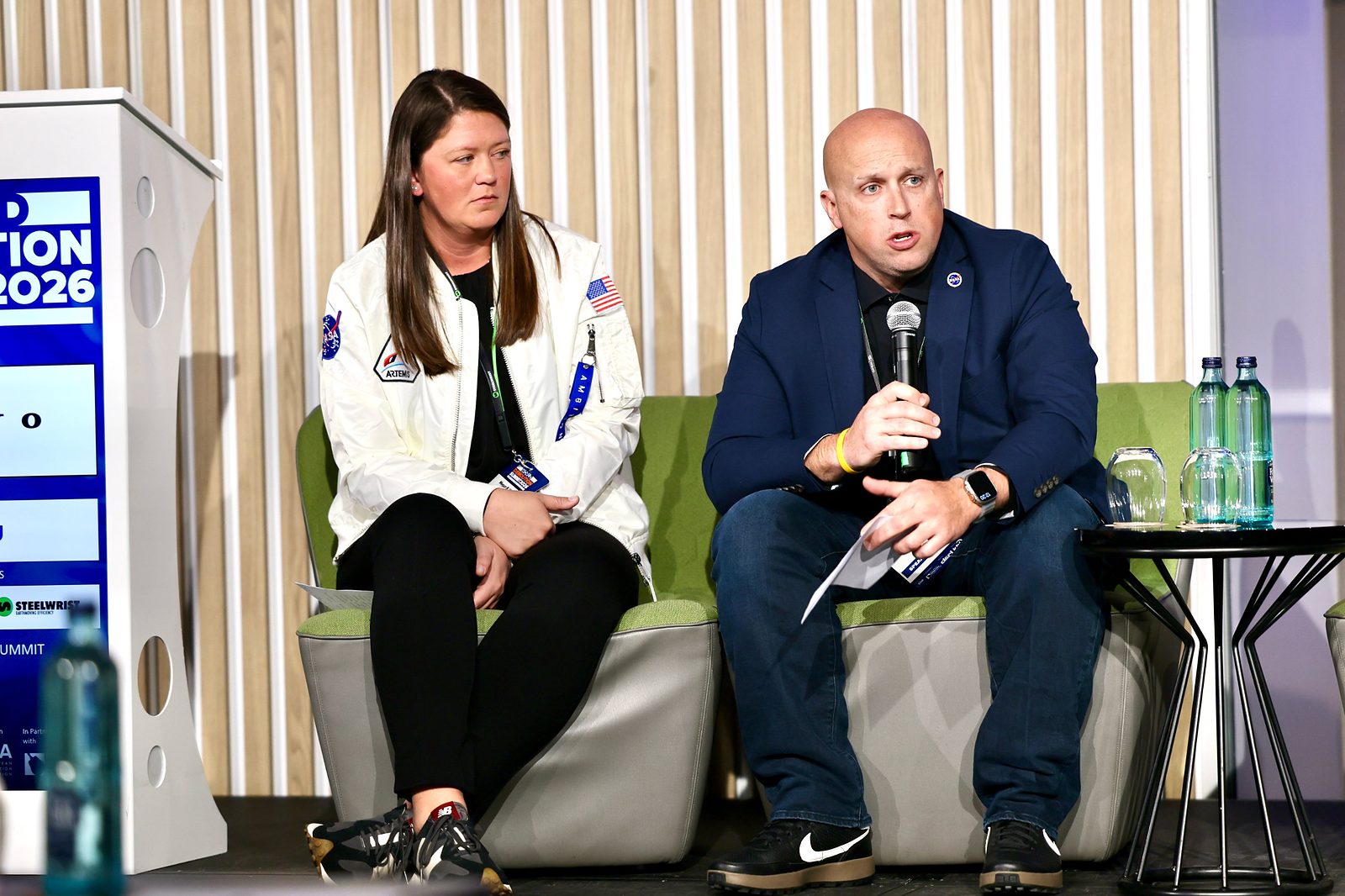
The keynote closed the way the best sessions do, with a conversation. Megan R. Vansant and Justin J. Taylor of NASA MSFC joined Austin, Ron, and JJ for questions from the audience. Having the owner of the structures sitting next to the team that took them down says a lot about how this project was run: as a partnership, from the first scoping meeting to the last pass of the excavator.
Awards night
The week ended with the World Demolition Awards. The Ahtna-Target JV was shortlisted for the Explosive Demolition Award for the dual implosion at NASA MSFC, an honor in itself given the caliber of work in the category. We didn’t take home the award. PDC Explosives Engineering did, for the Naga Thermal Smokestack Demolition, and we congratulate them and every winner of the evening.
What stays with us isn’t the trophy. It’s what the project accomplished: two purpose-built aerospace test structures brought down within their designed footprints, no impact to adjacent NASA assets, zero recordable incidents across 29,905 worker hours, and a recycling rate above 90 percent. That is the win, and the people behind it are the reason.
Thank you
A project like this never belongs to one company, and neither does the week we spent talking about it. Thank you to D&Ri, KHL Group, and the World Demolition Summit organizers for a well-run event and for the platform to share this story. Thank you to Megan Vansant and Justin Taylor of NASA MSFC for their trust and partnership. Thank you to our partners at Ahtna, Paul Rose, and Ron Gilbert of Dykon Demolition and DetX for a true one-team effort. And thank you to every Target and Ahtna team member whose work made this project possible.
The video
The 12-minute project video we showed at the summit follows the Saturn Test Stands from planning to the final seconds. It’s coming soon, and when it’s ready you’ll find it right here and on our social channels.


