
Markets
Commercial
Commercial and institutional properties with tight access, neighbors, and public visibility. When the public is watching and the neighbors are close, we plan access, closures, and communication before the work starts, and we keep people informed as it moves.
What defines it
Buildings that sit next to people, traffic, and neighbors.
Commercial demolition usually happens in the open: downtown streets, active campuses, and sites beside occupied buildings.
Tight sites often call for top-down mechanical demolition.
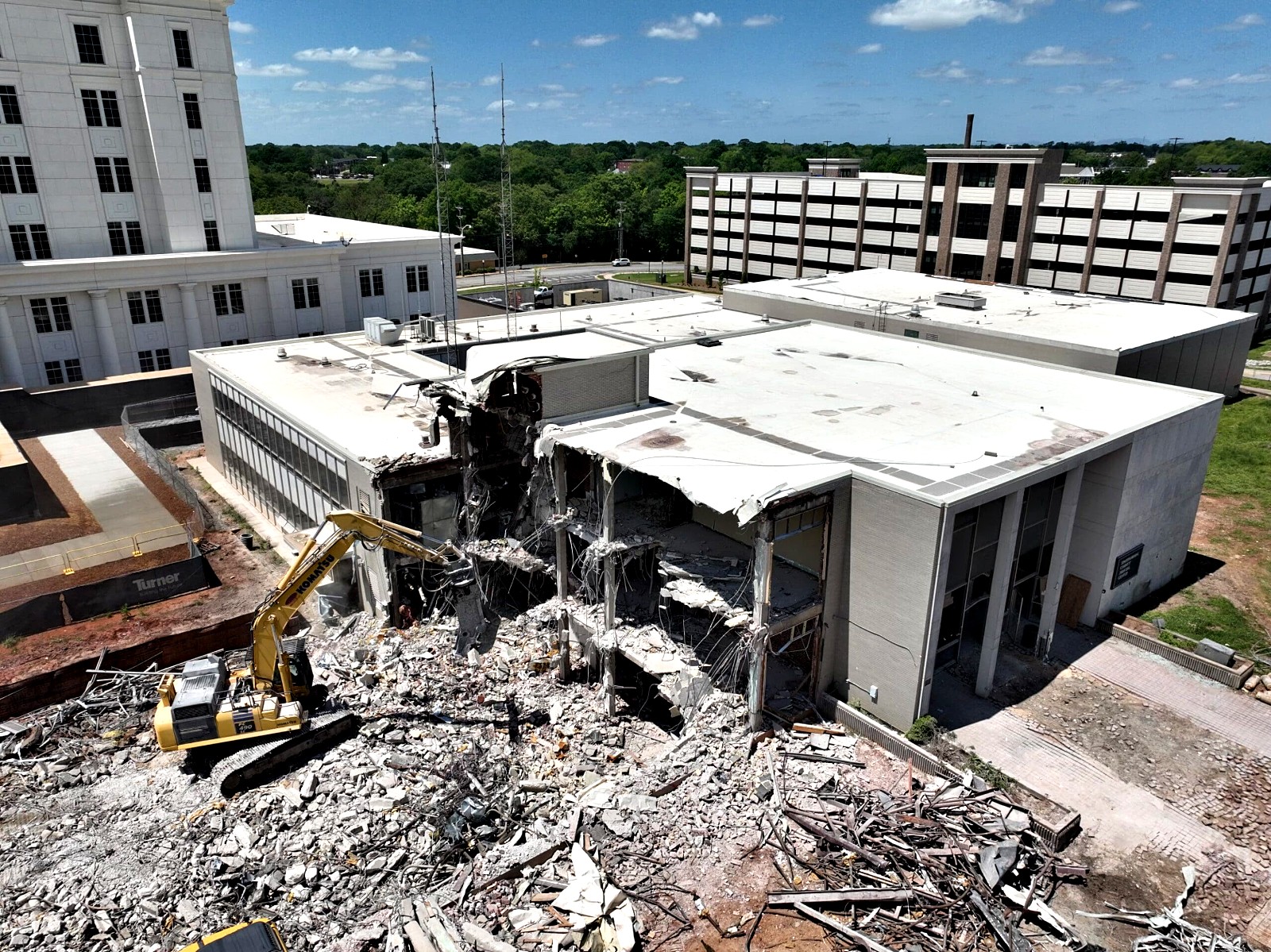
On a university campus in Clemson, SC, six buildings came down while the campus kept working. In Spartanburg, SC, a historic courthouse was demolished beside an operating courthouse with zero recordables. Both are on our Project Profiles page.
How we plan
- Permits and closures. Sidewalk, road, and utility approvals are arranged before work starts.
- Abatement first. Asbestos and universal waste are removed and documented before demolition.
- Matched to the site. Dust, noise, and vibration controls fit the neighbors, and the method is chosen to fit the structure.
- Recycled. Concrete and metals are recycled, and crushed concrete is reused where possible.
- Neighbors informed. Communication with owners, tenants, and nearby facilities continues through the project.

In detail
Each step is adjusted to the site and the project.
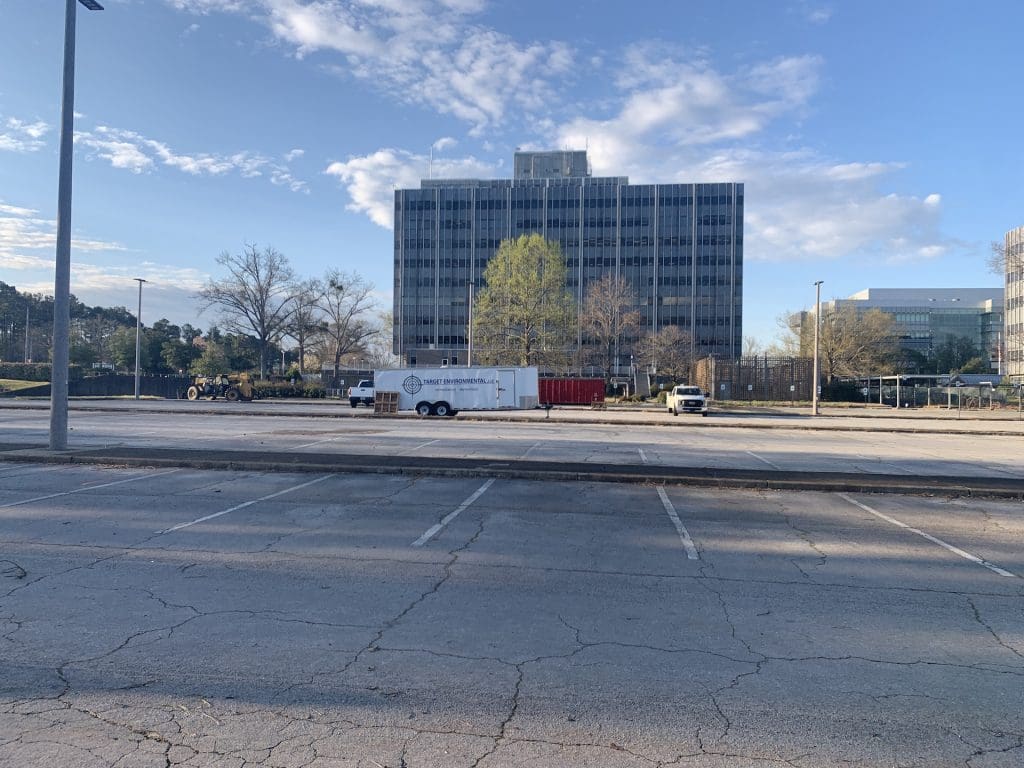
Permits and closures
Closures for sidewalks, roads, and utilities are approved ahead of time, so the public sees a planned work zone from day one.
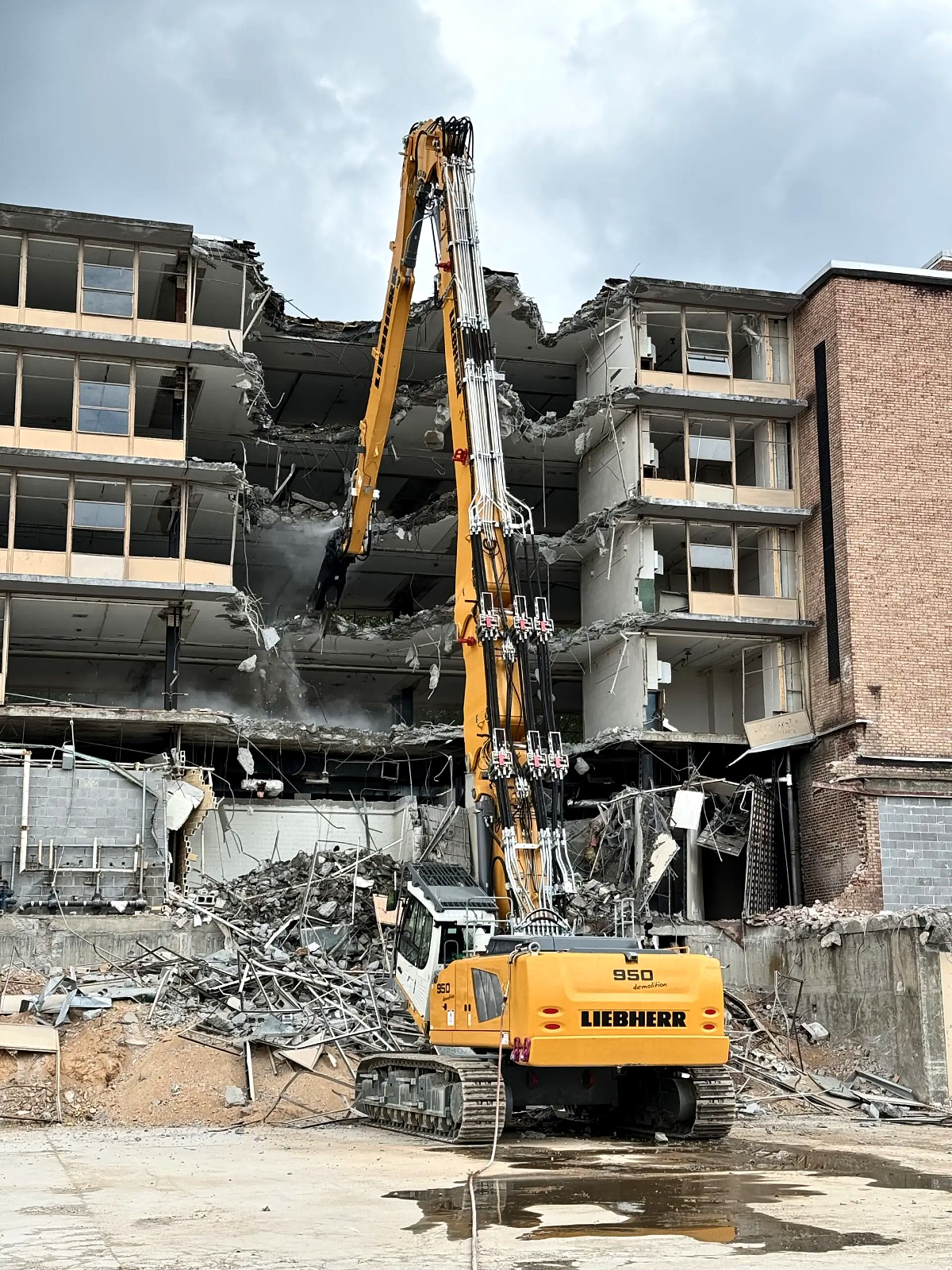
Abatement first
Hazardous materials such as asbestos and universal waste come out first and are documented before the structure is touched.
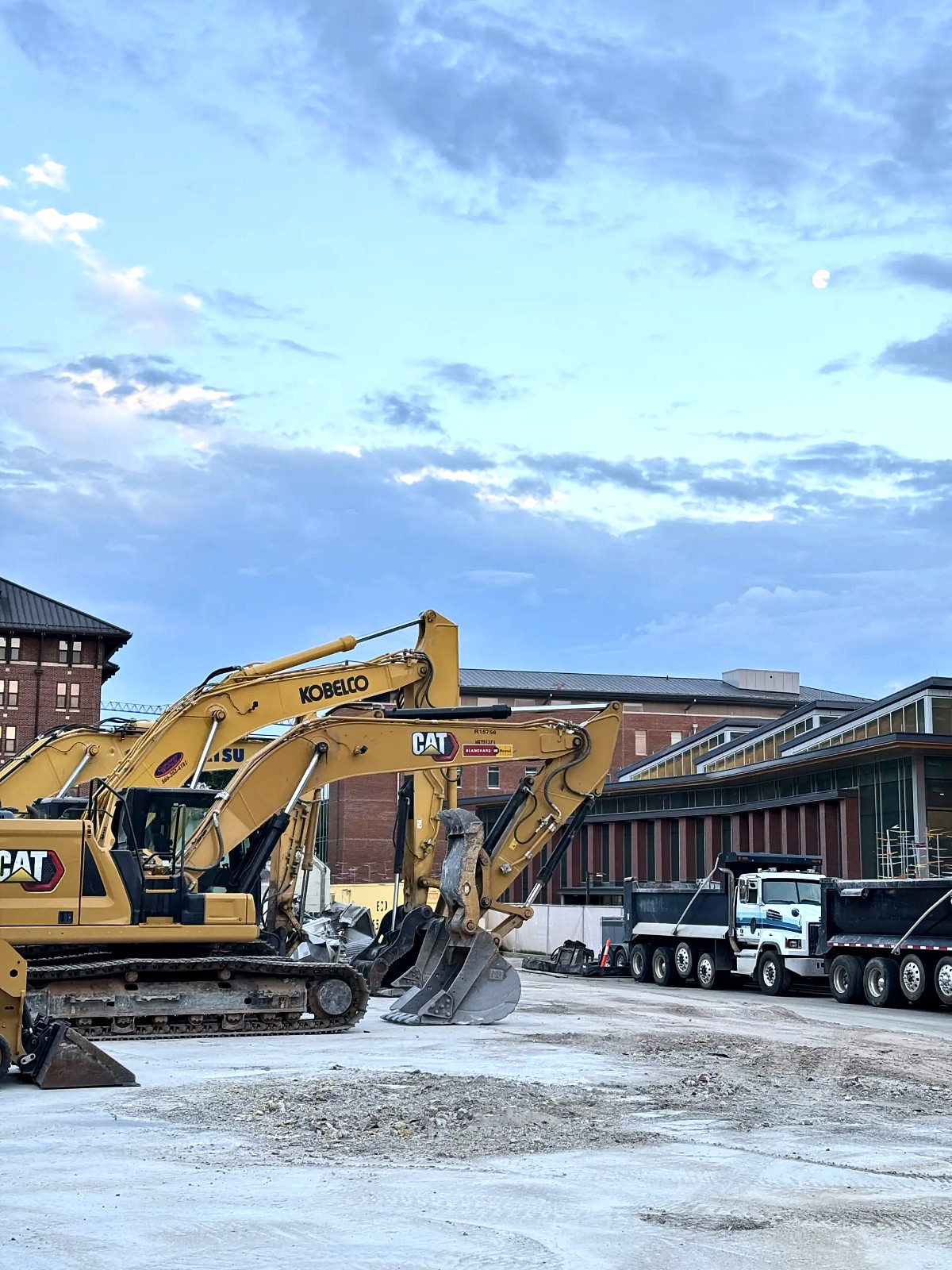
Matched to the site
Controls for dust, noise, and vibration are set for the neighbors, and the method is chosen to fit the building.
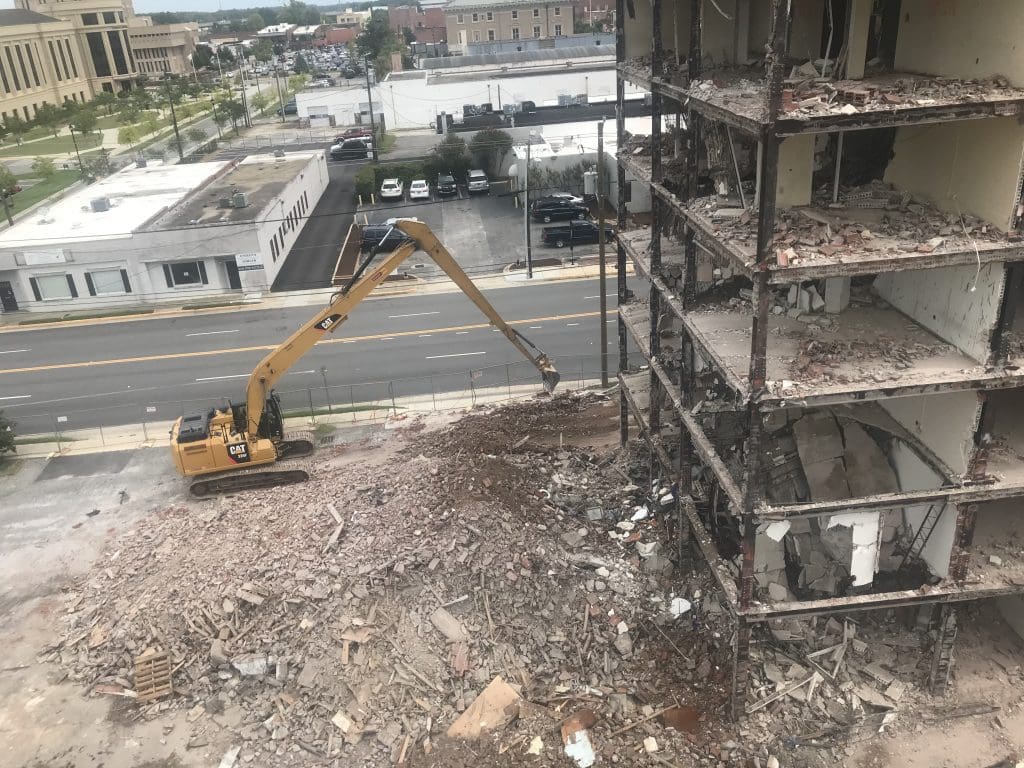
Recycled
Concrete and metals are recycled, with crushed concrete reused where possible.
Neighbors informed
Owners, tenants, and nearby facilities stay informed as the project moves, not only when it starts.

Who hires
Who we work for in this market
Developers and property owners, general contractors, cities and public agencies, and lenders or asset managers clearing aging buildings.
Past clients include a city, a university’s environmental contractor, and a general contractor.
Examples of our work
Commercial work in practice
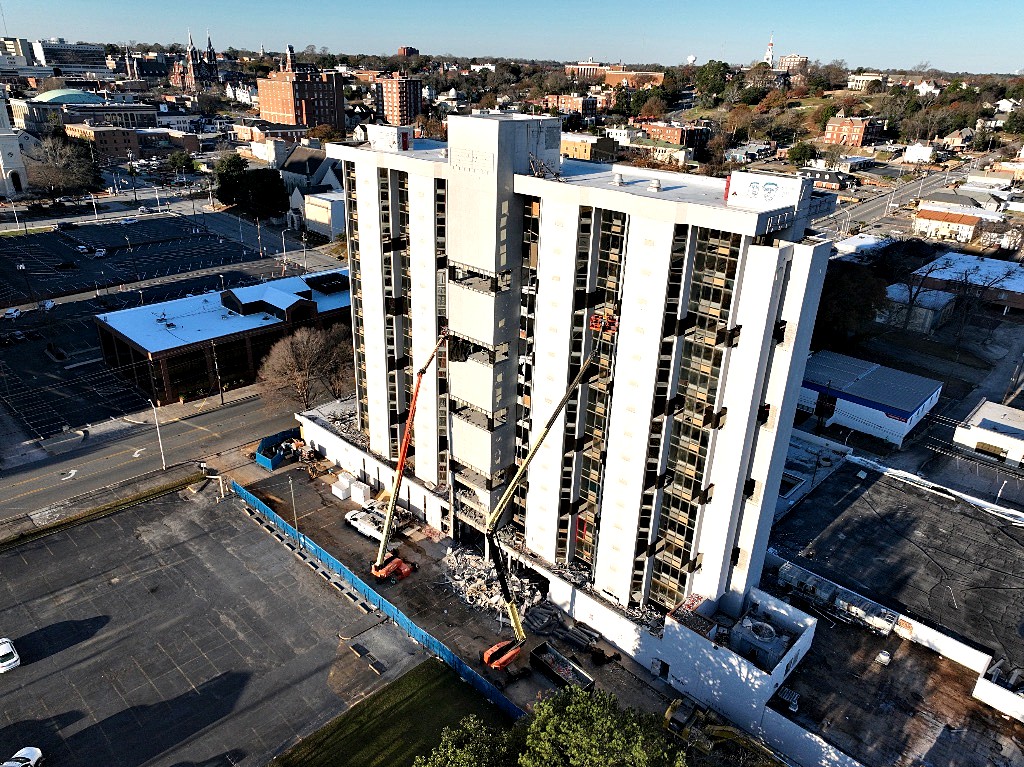
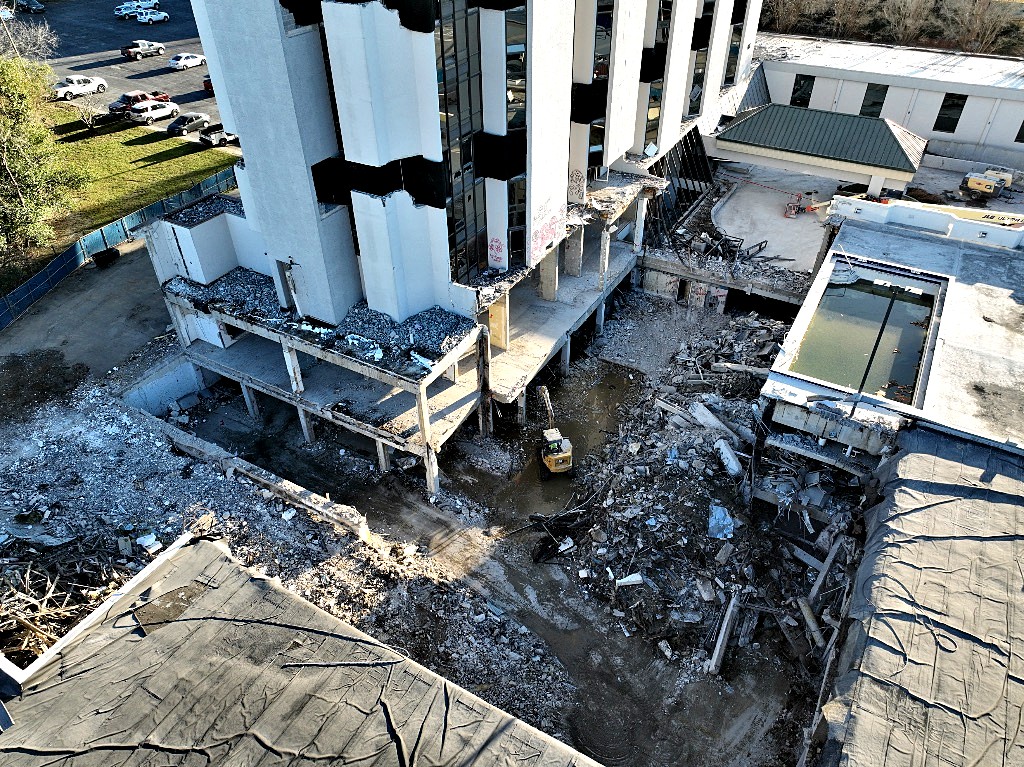
In Florence, an 8-story building came down on a tight downtown site, with road and sidewalk closures coordinated with the state DOT. In Spartanburg, a historic courthouse was demolished beside an operating courthouse, with zero recordables.
Open a project profile to see how each tight site was handled.
Commercial · Active public facility
Spartanburg Courthouse, Spartanburg, SC
Demolition of a historic courthouse beside an operating courthouse, with pedestrian protection, dust mitigation, and zero recordables.
Commercial · Urban site
Former Florentine Building, Florence, SC
Abatement and demolition of an 8-story, 31,146 SF mixed-use building in downtown Florence, with road and sidewalk closures coordinated with the state DOT.


